CHAPTER 06
The Arrest and Trial of Jesus
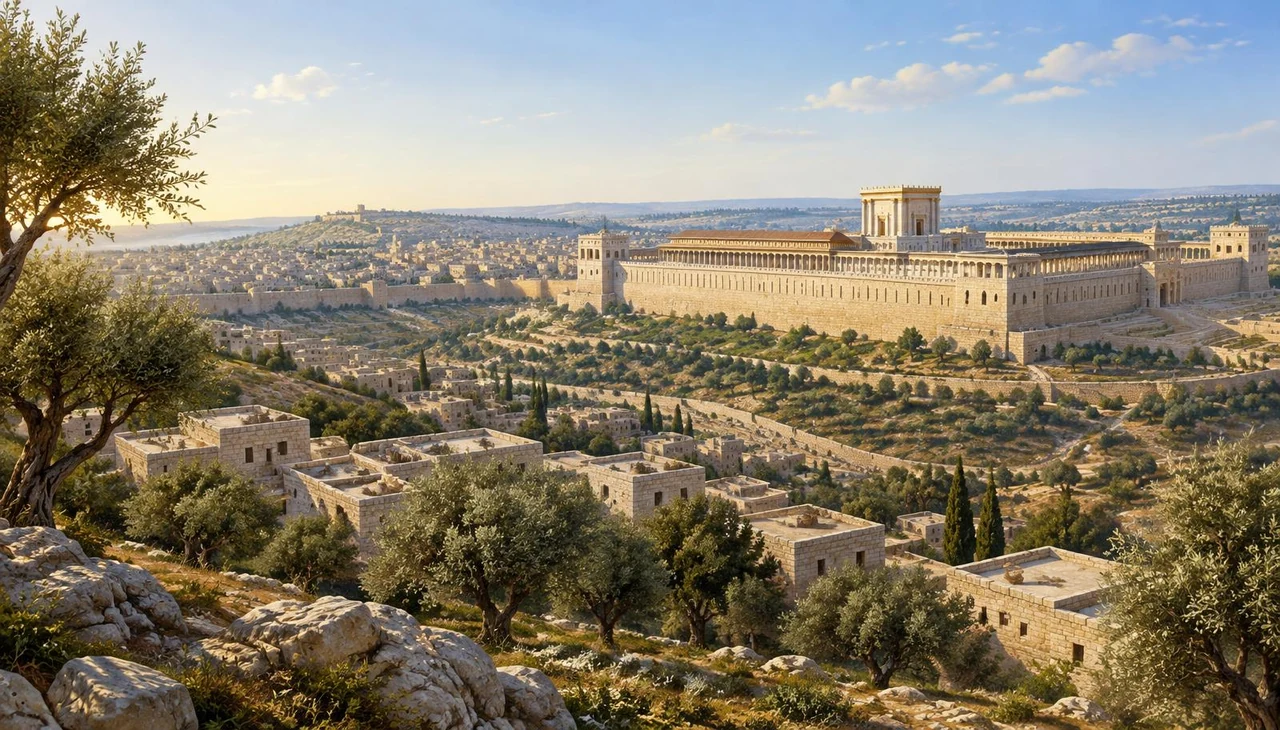
Artistic reconstruction · not an authenticated photograph or exact archaeological model.
Guest progress is saved for this browser session only. Sign in for private account saving.
Ancient geography
Jerusalem • hills & valleys
Herod’s palace proposal
Location uncertain
The western palace area is one proposal for Pilate’s praetorium. The trial’s precise setting remains disputed.
31.7758° N · 35.2281° E · representative point
Geography sourceCoordinate-based schematic, not an archaeological survey. Valley/ridge lines are approximate; no reconstructed street route or first-century wall boundary is claimed. Pins distinguish geography, tradition and uncertainty.
The biblical account
Prepared narrative summary · not a Scripture quotation
The Gospels describe Jesus' arrest and subsequent hearings before religious and Roman authorities. Mark recounts questioning, denial by Peter, and Jesus being brought before Pilate. The events lead toward a sentence of crucifixion. Read each Gospel's account carefully: their emphases and ordering are not identical. This journey does not combine their details into a supposedly exact transcript. Nor does it assign collective blame to Jewish people, past or present. Its focus is the biblical narrative, the actions of particular participants and the use of authority under Roman rule.
Historical context
Pilate was a Roman governor of Judea. The precise location of Jesus' Roman hearing is debated. Today's Via Dolorosa is a devotional route, not a demonstrably exact first-century itinerary.
Pause & Reflect
What responsibilities accompany authority when public pressure is strong?