CHAPTER 07
The Crucifixion
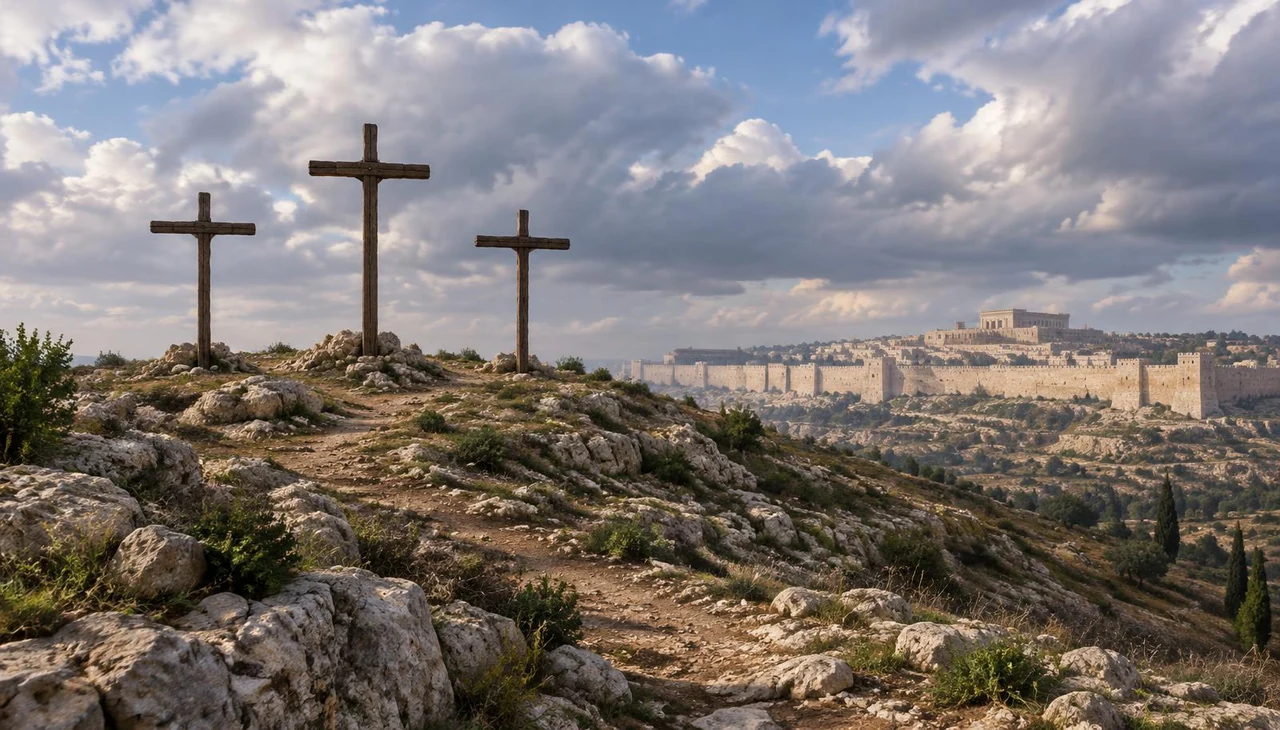
Artistic reconstruction · not an authenticated photograph or exact archaeological model.
Guest progress is saved for this browser session only. Sign in for private account saving.
Ancient geography
Jerusalem • hills & valleys
Golgotha & tomb tradition
Traditional identification
The Holy Sepulchre commemorates Jesus’ crucifixion and burial over an ancient quarry and burial area. Archaeological context does not prove the precise event locations.
31.7784° N · 35.2298° E · representative point
Geography sourceCoordinate-based schematic, not an archaeological survey. Valley/ridge lines are approximate; no reconstructed street route or first-century wall boundary is claimed. Pins distinguish geography, tradition and uncertainty.
The biblical account
Prepared narrative summary · not a Scripture quotation
Mark describes Jesus led to Golgotha, crucified, mocked and watched by those nearby. His account includes suffering, darkness, Jesus' cry and his death. The artwork avoids a graphic depiction of violence. It is a contemplative landscape, not documentary evidence of the hill's appearance. Christian traditions understand the meaning of Jesus' death through several theological frameworks. This chapter does not replace the biblical account with any one framework; it invites you to read the passage and reflect on the people, words and responses it records.
Historical context
The Church of the Holy Sepulchre is the longstanding traditional site associated with crucifixion and burial. Exact identifications remain subjects of historical discussion. The outdoor hill in this artwork is not a map of that site.
Pause & Reflect
Which response to Jesus' suffering in this passage asks for your closest attention?