CHAPTER 09
The Resurrection
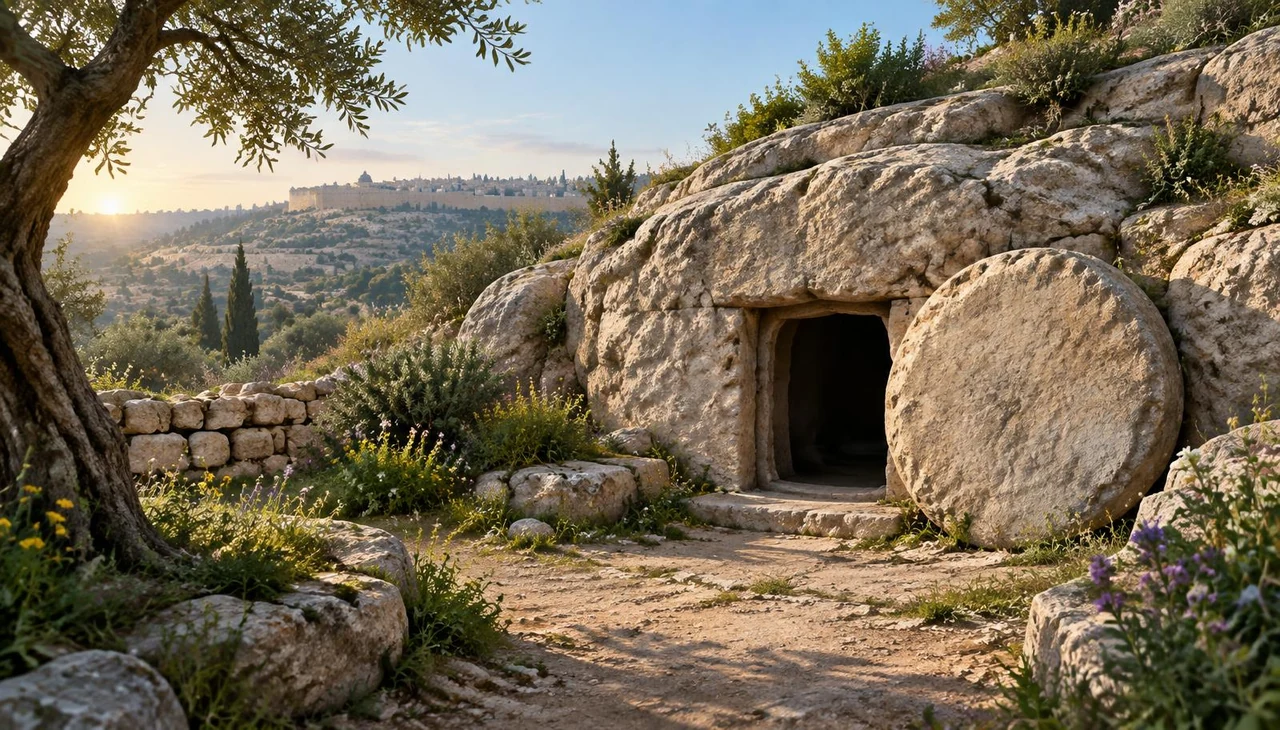
Artistic reconstruction · not an authenticated photograph or exact archaeological model.
Guest progress is saved for this browser session only. Sign in for private account saving.
Ancient geography
Jerusalem • hills & valleys
Jerusalem
Historical geography
A city-area reference point, not an exact Gospel event location. Modern walls are not shown as first-century walls.
31.7778° N · 35.2317° E · representative point
Geography sourceCoordinate-based schematic, not an archaeological survey. Valley/ridge lines are approximate; no reconstructed street route or first-century wall boundary is claimed. Pins distinguish geography, tradition and uncertainty.
The biblical account
Prepared narrative summary · not a Scripture quotation
John describes Mary Magdalene near the tomb and her encounter with the risen Jesus. Later in the chapter, Jesus appears to disciples gathered behind closed doors, and Thomas's response receives particular attention. The accounts proclaim resurrection through encounters and testimony. This journey presents that proclamation as the biblical text's claim, not as an archaeological conclusion drawn from an illustration. The tomb image returns as a setting of remembrance; it does not portray an unrecorded moment inside the tomb or invent details of how resurrection occurred.
Historical context
Christian belief in the resurrection rests on the Gospel proclamation and related early Christian testimony, not on this artistic reconstruction. The exact setting of every appearance cannot be securely placed on a modern map.
Pause & Reflect
What do recognition, testimony and doubt contribute to John's account?