CHAPTER 01
Welcome to First-Century Jerusalem
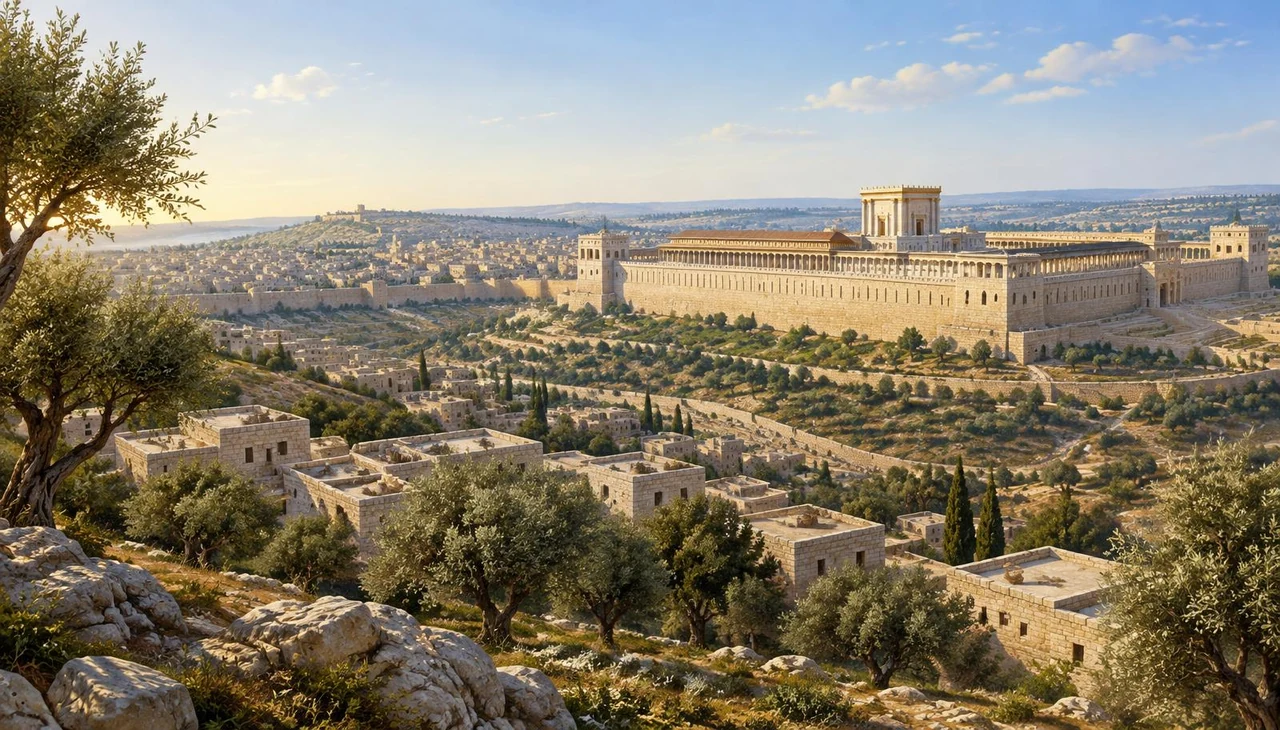
Artistic reconstruction · not an authenticated photograph or exact archaeological model.
Guest progress is saved for this browser session only. Sign in for private account saving.
Ancient geography
Jerusalem • hills & valleys
Jerusalem
Historical geography
A city-area reference point, not an exact Gospel event location. Modern walls are not shown as first-century walls.
31.7778° N · 35.2317° E · representative point
Geography sourceCoordinate-based schematic, not an archaeological survey. Valley/ridge lines are approximate; no reconstructed street route or first-century wall boundary is claimed. Pins distinguish geography, tradition and uncertainty.
The biblical account
Prepared narrative summary · not a Scripture quotation
Jerusalem was a living city of worship, commerce and pilgrimage. The Gospel accounts place Jesus among its crowds during the final days of his ministry. As he approaches the city, people welcome him, while Luke also describes his grief over Jerusalem. These are the biblical accounts, not a reconstruction of every street or encounter. Begin by observing the hills, valleys and Temple platform that shape the setting. The illustration imagines an ancient city; it does not show an authenticated view from the first century.
Historical context
The Temple complex was expanded under Herod and destroyed by Roman forces in 70 CE. The ancient city and modern Jerusalem have different street patterns and layers of occupation. Visible architecture in this scene is artistic reconstruction.
Pause & Reflect
How does seeing Jerusalem as a living city change the way you approach the Gospel accounts?