CHAPTER 02
The Jerusalem Temple
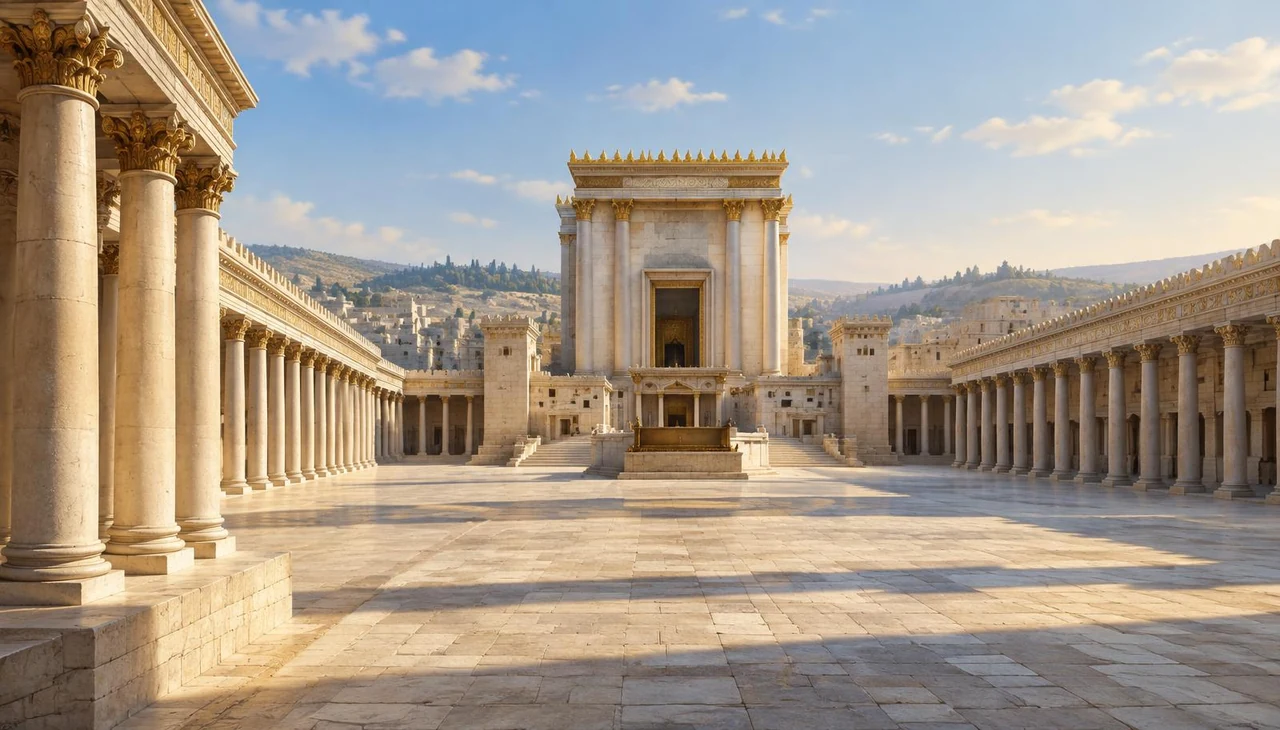
Artistic reconstruction · not an authenticated photograph or exact archaeological model.
Guest progress is saved for this browser session only. Sign in for private account saving.
Ancient geography
Jerusalem • hills & valleys
Temple precinct
Historical geography
The Temple stood in this broader precinct. This marker does not identify an exact doorway or position where Jesus taught.
31.7780° N · 35.2354° E · representative point
Geography sourceCoordinate-based schematic, not an archaeological survey. Valley/ridge lines are approximate; no reconstructed street route or first-century wall boundary is claimed. Pins distinguish geography, tradition and uncertainty.
The biblical account
Prepared narrative summary · not a Scripture quotation
For the people in the Gospel narratives, the Temple is not an abandoned monument. It is a place of prayer, sacrifice and gathering, embedded in the life of Jerusalem. Pilgrims arrive for festivals and teachers speak in its courts. Mark describes Jesus entering the Temple and challenging activities there. This chapter separates that scriptural account from what remains of the architecture today. Imagine the scale of the surrounding courts, but do not mistake the illustration for an exact plan of the sanctuary or a record of a particular day.
Historical context
The Western Wall belongs to the retaining structure of the Temple platform, not the Temple sanctuary itself. The sanctuary no longer stands; surviving remains and written accounts inform reconstructions without establishing every architectural detail.
Pause & Reflect
What is the relationship between a place of worship and the life of its surrounding community?