CHAPTER 04
The Last Supper
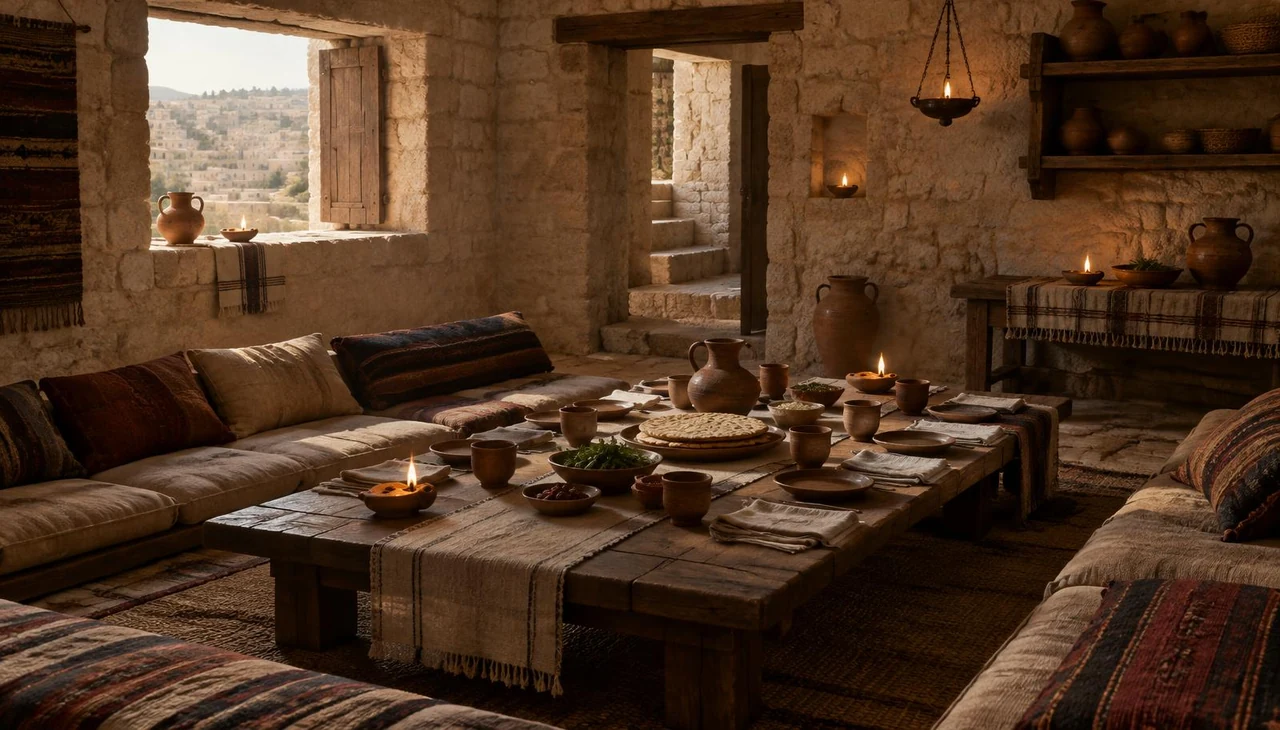
Artistic reconstruction · not an authenticated photograph or exact archaeological model.
Guest progress is saved for this browser session only. Sign in for private account saving.
Ancient geography
Jerusalem • hills & valleys
Upper Room tradition
Traditional identification
The Cenacle commemorates the Last Supper. The standing room is later; the original supper room has not been securely located.
31.7717° N · 35.2292° E · representative point
Geography sourceCoordinate-based schematic, not an archaeological survey. Valley/ridge lines are approximate; no reconstructed street route or first-century wall boundary is claimed. Pins distinguish geography, tradition and uncertainty.
The biblical account
Prepared narrative summary · not a Scripture quotation
Before his arrest, Jesus shares a final meal with his disciples. Mark describes preparations and the meal, while John describes Jesus washing his disciples' feet. The accounts connect fellowship with service, betrayal and approaching suffering. This prepared room is an artistic setting, not a recovered room or a reproduction of the table. Christians differ in how they explain the sacramental meaning of the meal; this journey directs you to the texts without presenting one denominational explanation as the only possible reading.
Historical context
The Cenacle on Mount Zion is traditionally associated with the Last Supper. The present building is not an independently verified first-century room from the Gospel account. Furnishings in the artwork are imaginative.
Pause & Reflect
What does Jesus' act of service contribute to your understanding of leadership?