CHAPTER 07
Athens and the Areopagus
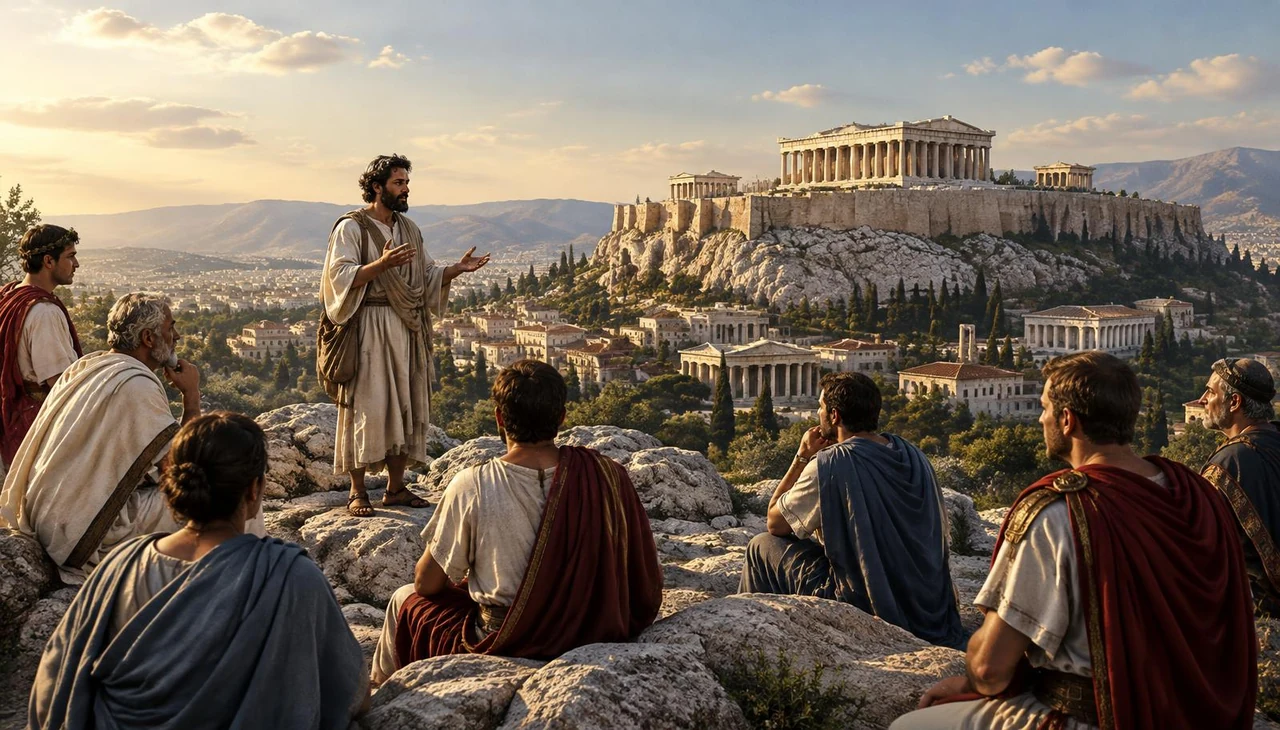
Artistic reconstruction · not an authenticated photograph or exact archaeological model.
Guest progress is saved for this browser session only. Sign in for private account saving.
The biblical account
Prepared narrative summary · not a Scripture quotation
While waiting in Athens, Paul speaks in the synagogue and marketplace. Acts describes his distress at idols and conversations with Epicurean and Stoic philosophers. Discussion moves to the Areopagus. He begins with something listeners recognize: their religious devotion and an altar to an unknown god. From that point of contact he speaks about the Creator, humanity’s shared life, and the limits of objects made by human hands. The address turns toward repentance, judgment, and resurrection. Responses differ. Some mock, others want to hear more, and some believe, including Dionysius and Damaris. The city does not undergo a sweeping conversion in the account. Particular people respond within a mixed audience, showing witness shaped by attention and clarity rather than public conquest.
Historical context
Areopagus can mean a hill or its associated council. The precise venue in Acts 17 remains debated. The Acropolis is not the Areopagus, and the unknown-god altar has not been securely identified. The speech is preserved through Acts, not an independently verified transcript. Artwork review: Imagined Athenian speech with Acropolis backdrop; exact Areopagus venue debated. Markers indicate educational themes anchored to illustrated details, not verified event coordinates.
- Paul: historical biography and limits
- Peter and Paul: historical timeline
- Acropolis: broader Athenian context, not the Areopagus
Pause & Reflect
Can you attend to another person’s world without hiding your convictions?