CHAPTER 09
Bread, Power, and a Crossed-Hand Blessing
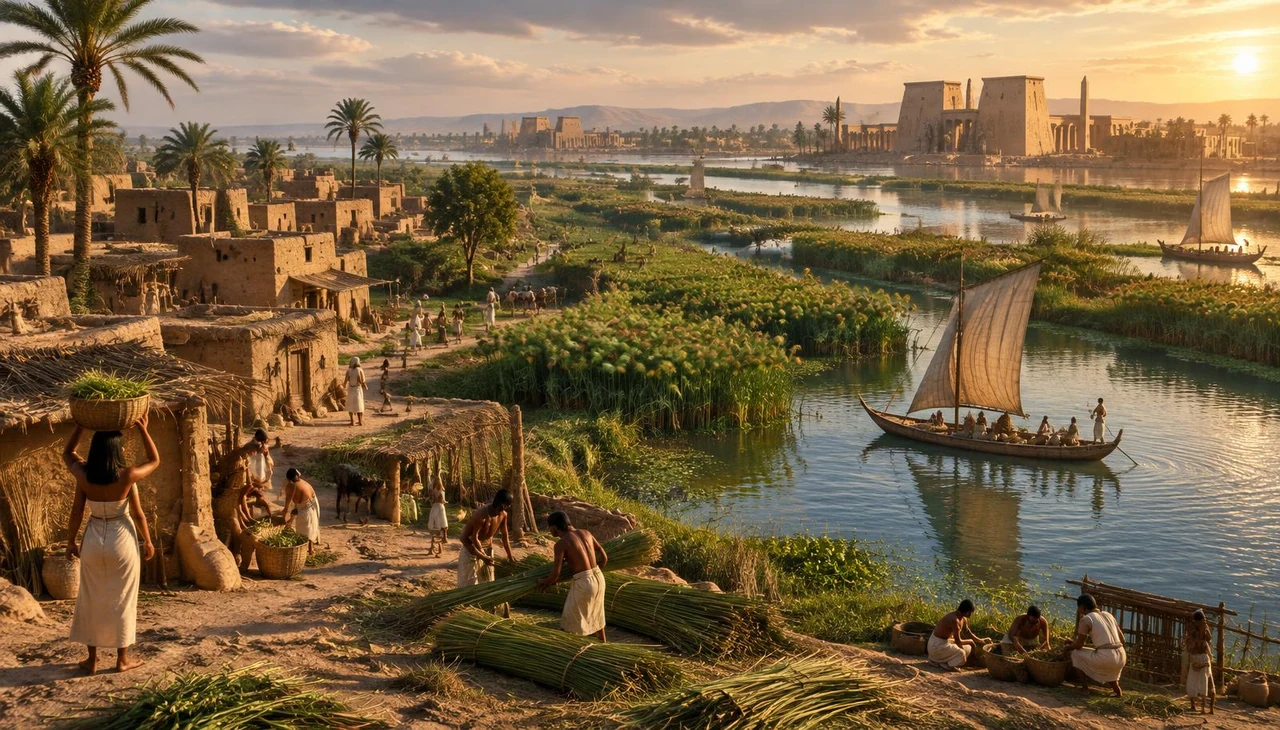
Artistic reconstruction · not an authenticated photograph or exact archaeological model.
Guest progress is saved for this browser session only. Sign in for private account saving.
The biblical account
Prepared narrative summary · not a Scripture quotation
Joseph presents his family to Pharaoh, and Jacob blesses the ruler before settling with his household. As famine worsens, Egyptians exchange money, livestock, and finally land and their own labor for food. Joseph centralizes landholding under Pharaoh and establishes a continuing fifth of the produce for the crown, with an exception for priestly land. The people express gratitude for survival, but the account also records their loss of independence. Later, the aging Jacob asks to be buried outside Egypt. He receives Joseph's sons, Ephraim and Manasseh, as his own and crosses his hands to give the younger the greater blessing. Joseph objects, but Jacob insists. Public administration and family succession each reveal how power shapes the future.
Historical context
Genesis's account of land transfer and royal taxation is not a securely dated explanation of all Egyptian landholding. Saving lives and concentrating power are both explicit narrative concerns worth examining. Artwork notice: this is a reused contextual reconstruction, NOT event-specific artwork. Its fields do not document Joseph's policies, and Jacob's blessing is not depicted.
- Genesis 47–48 — World English Bible
- Britannica — Joseph: Egyptian authority in the biblical narrative
Pause & Reflect
How should life-saving leadership be evaluated when its methods also increase dependency and concentrated power?