CHAPTER 10
Songs, Reckoning, and the Threshing Floor
Artistic reconstruction · not an authenticated photograph or exact archaeological model.
Guest progress is saved for this browser session only. Sign in for private account saving.
The biblical account
Prepared narrative summary · not a Scripture quotation
The closing chapters gather famine, warfare, songs, and memories rather than continuing a simple year-by-year account. Rizpah keeps vigil over the exposed dead after a grim settlement with the Gibeonites, and David arranges proper burial for Saul’s family. Songs celebrate deliverance while the warriors’ list ends with Uriah’s name, keeping a troubling memory within the record. David then orders a census despite Joab’s objections. He recognizes guilt afterward, and plague devastates the people. Seeing the destruction approach Jerusalem, he pleads that the burden fall on him and his household rather than the flock. At Araunah’s threshing floor he buys the site and offers sacrifices instead of accepting a costless gift. The book closes with answered supplication and the plague restrained, not with a spotless king.
Historical context
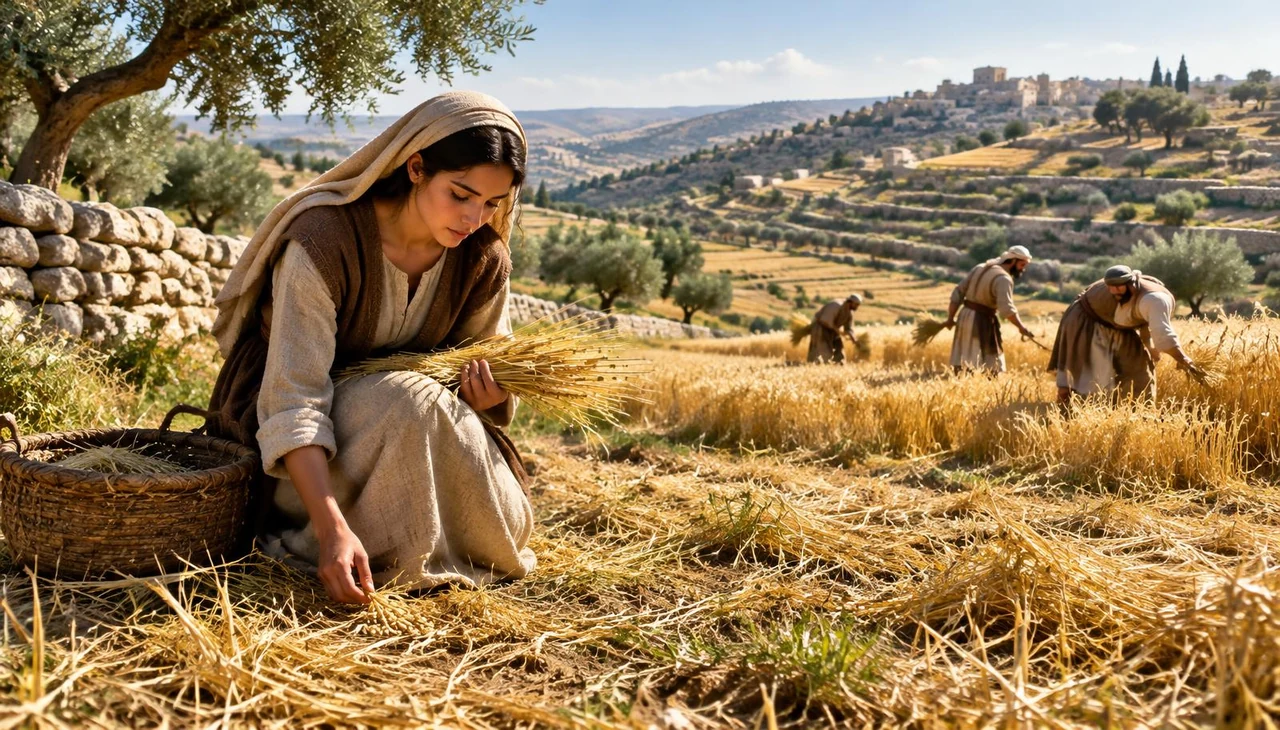
Second Samuel 21–24 is a thematic closing collection, not necessarily a continuous chronology. Later biblical tradition connects the threshing floor with the temple site, but its exact layout is unrecoverable. The image is a reused contextual artistic reconstruction, not an event-specific illustration; the harvest field is not Araunah’s threshing floor.
Pause & Reflect
What would repentance cost if it included responsibility for the people affected by your decisions?